Risk and Opportunity in Short Term Rentals (“STRs”)

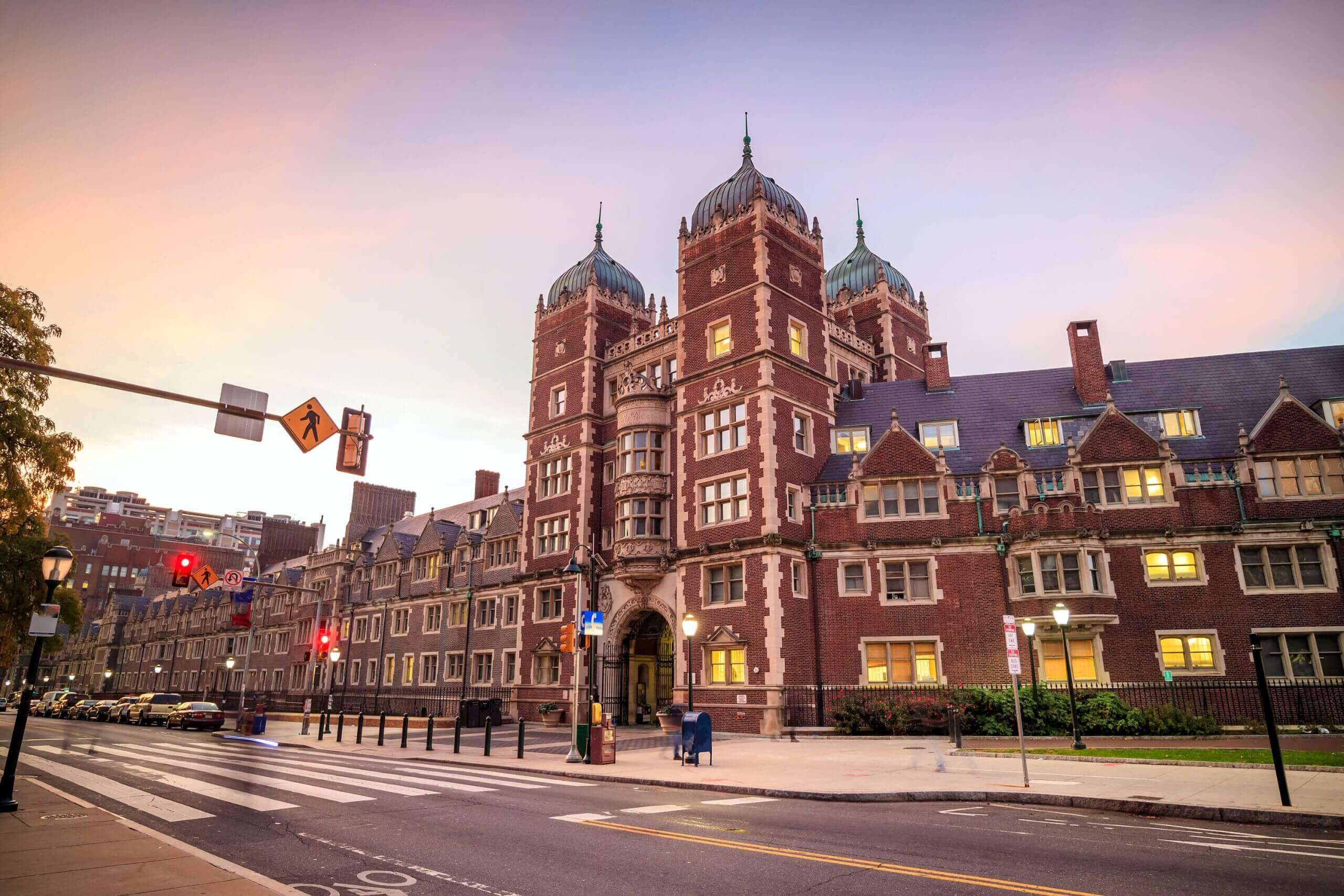
Each September, Greater Philadelphia changes noticeably. Students return, university neighborhoods refill, hospital systems settle into a new academic year, and the businesses surrounding these institutions see renewed activity.
But Philadelphia’s “eds & meds” economy means much more than a seasonal boost. Healthcare and education account for roughly one-quarter of regional employment and provide a level of stability that influences housing demand, neighborhood investment, retail activity, office needs, and even industrial growth.
For commercial real estate investors, the important question is not simply how large these institutions are, but how their presence shapes where people live, work, shop, invest, and develop across Greater Philadelphia.
The relationship between universities, hospitals, and housing is probably most visible in multifamily.
Every year, tens of thousands of students, residents, fellows, nurses, physicians, researchers, professors, and support staff need housing within reasonable distance of Philadelphia’s major institutions. University City alone has more than 51,000 students enrolled in higher-education institutions, while the neighborhood accounts for approximately 11% of all jobs in Philadelphia despite occupying less than 2% of the city’s land area.
That concentration produces housing demand at multiple price points.
Students support traditional rental housing and purpose-built student housing. Medical residents and young professionals create demand for apartments near hospitals and transit. More established physicians, professors, researchers, and administrators often contribute to demand for higher-quality rentals and homeownership in surrounding neighborhoods and suburban communities.
The effect also extends beyond University City. Temple influences North Philadelphia; Jefferson supports Center City and surrounding neighborhoods; Main Line universities contribute to housing demand across Montgomery and Delaware Counties; and suburban hospital systems create employment nodes throughout Chester, Bucks, Burlington, and Gloucester Counties.
For multifamily investors, proximity to an institutional anchor can therefore provide a more durable demand base than population growth alone.
Philadelphia’s office sector remains challenged, but eds & meds help explain why certain pockets continue to perform differently from the broader market.
Universities and healthcare systems require administrative offices, clinical space, research facilities, laboratories, outpatient centers, and professional-service providers. These uses do not behave exactly like traditional corporate office tenants.
Healthcare in particular has proven relatively resistant to remote work. Patients still need physical facilities, laboratories require specialized space, and research teams benefit from clustering near hospitals and universities.
That does not mean every office building near a university or hospital will succeed. Quite the opposite: location, configuration, building quality, and adaptability are becoming increasingly important.
However, institutional demand can provide a foundation for medical office, research, life science, administrative, and adaptive-reuse opportunities that simply does not exist in many conventional office submarkets.
University City demonstrates this clearly. Its employment density is driven heavily by Penn, Penn Medicine, CHOP, Drexel, and related research organizations, but that activity has also helped attract technology firms, startups, professional services, and life-science companies.
For office investors, the lesson is increasingly to follow employment ecosystems, not simply office inventory.
The return of students each fall makes the retail impact of eds & meds particularly easy to see.
Coffee shops, restaurants, grocery stores, fitness concepts, pharmacies, bars, convenience retailers, and personal-service businesses all benefit from the daily population generated by universities and hospitals.
Unlike traditional office districts, where daytime populations can fluctuate significantly with hybrid work, hospital and university neighborhoods tend to generate activity throughout the day and often into evenings and weekends.
A hospital campus operates 24 hours a day. A university brings students who live, eat, shop, study, exercise, and socialize nearby.
This helps explain why neighborhood retail surrounding strong institutional anchors can perform differently from retail that depends primarily on commuter office traffic.
Temple offers a useful illustration of the scale involved. A 2026 economic-impact study commissioned by the university estimated that Temple and Temple Health together generate roughly $7.7 billion in economic impact within Philadelphia and support nearly 48,000 jobs across Greater Philadelphia.
Those jobs translate into everyday consumer activity that supports the surrounding commercial ecosystem.
Industrial may appear less connected to universities and hospitals, but the relationship is significant.
Large healthcare systems require enormous supply chains. Medical equipment, pharmaceuticals, food, linens, laboratory materials, packaging, maintenance supplies, and countless other products must move through warehouses and distribution networks before reaching a hospital or research facility.
Philadelphia’s life-science ecosystem also creates demand for specialized manufacturing, cold storage, laboratory-support facilities, and distribution.
That activity sits alongside the region’s broader logistics advantage. Philadelphia remains strategically positioned between New York and Washington, D.C., while CoStar identifies trade, transportation, and logistics as another major pillar of the regional economy.
As healthcare and research expand, so does the ecosystem of suppliers supporting them.
For industrial investors, the opportunity is therefore not necessarily a warehouse directly adjacent to a hospital. It is understanding which manufacturers, distributors, laboratories, and service providers benefit from the continued expansion of the region’s institutional economy.
There is an important caveat.
Being an eds & meds economy provides stability, but it does not eliminate risk.
Universities nationally are dealing with demographic pressures, enrollment challenges, and rising operating costs. Hospital systems face reimbursement pressure, labor costs, and changing models of care.
Even within Greater Philadelphia, financial performance varies significantly. During the first nine months of fiscal 2026, Penn Medicine and CHOP reported strong operating results, while Jefferson Health, Temple University Health System, Tower Health, and Redeemer Health faced varying levels of operating pressure.
That distinction matters for real estate.
Investors should not simply assume that every property located near a hospital or university is automatically protected. The financial strength, enrollment trajectory, capital plans, and competitive position of the institution itself matter.
Philadelphia benefits from several globally recognized institutions with enormous economic footprints – but careful underwriting still requires understanding which anchors are growing and which may be under pressure.
Philadelphia’s identity as an eds & meds city means far more than having a large number of hospitals and universities.
These institutions are among the region’s largest employers, attract students and professionals from around the world, bring research and healthcare dollars into the local economy, and generate demand for housing, retail, office, industrial, and neighborhood services.
As universities return to full activity this September, the immediate effect will be visible in busier streets, fuller apartments, and stronger neighborhood retail activity. The more important effect, however, is structural.
In a commercial real estate environment where investors are placing greater emphasis on durable demand and resilient employment, Greater Philadelphia’s universities and healthcare systems remain one of the region’s strongest competitive advantages. The opportunity for CRE investors is understanding where that economic activity is growing, and positioning assets around the neighborhoods, infrastructure, and businesses that benefit from it.